


The Bible has a lot of moments where regular folks like kings, prophets, mothers, and disciples they just stopped and prayed during their toughest days. Some of the prayers are like cries coming from desperation, others are songs that talk about victory and then you have those quiet confessions that were whispered when no one else was around which is pretty significant. The powerful part isn’t about using perfect words. It is more about being honest. These prayers within the Bible show us how to bring real fear, gratitude that is real, and failure that feels real right to God, and they can help us today in finding that kind of honest faith that can be strengthening too.
Thank you for reading this post, don't forget to subscribe!
Jesus’ High Priestly Prayer (John 17)

On the night before He was crucified, Jesus did not pray for Himself first but instead prayed for His disciples and then for every believer that would come after them or after the apostles. This prayer which is often called the “High Priestly Prayer” is one of the longest prayers of Jesus that have been recorded, and it reveals what was of most importance to Him in His last hours which included unity protection and the hope that His followers would understand they were loved a lot.
What makes this prayer quite striking is how selfless it is. While facing betrayal and suffering and death, Jesus used the last moments that He had where He was free to intercede for others instead of pleading for Himself. He asked the Father to protect His disciples from the hostility of the world, to unite them into one, and to let them share in the same glory and love that He had known in eternity.
For anyone who is facing a hard season, this prayer serves as a reminder that even in our darkest hour, thinking of others and trusting God for their protection can also be an act of faith of a kind. It teaches us that real true strength often looks like putting other people first even if we are the ones who are in need ourselves.
Moses and Miriam’s Song of Victory (Exodus 15:1–21)

After the Israelites crossed the Red Sea and they saw Pharaoh’s army go down in the water, Moses and his sister Miriam they led the people in a loud song of praise. It was not a quiet, private kind of prayer it was loud and physical and everyone came together with Miriam she took a tambourine and danced while the women sang with her.
This song of victory it stands out because it happens right after they got delivered, not years later when maybe, the memory is all faded. The Israelites, yeah, they just saw something impossible happen right before their eyes, and their reaction was quick, unfiltered thankfulness not thinking it through, not doubting, just singing praise for a God who proved Himself faithful right then.
It gives a strong reminder that praise there’s no need to wait for the “right” moment or to have the perfect words ready. Sometimes the most faith-filled thing to do in response to God’s help is just loud thankfulness right away — celebrating a win the moment it happens, instead of just letting the moment slip by without mentioned.
Read More: 120+ Sweet & Romantic I Miss You Messages for Her to Make Her Smile
Hannah’s Prayer of Praise (1 Samuel 2:1–10)

Hannah had spent many years being really sad and feeling sorrowful because she couldn’t have children, and people made fun of her for it. She prayed a lot, really fervently at the temple, actually—so much that a priest thought she was drunk one time. When God finally answered her prayer with the birth of her son Samuel, her response was not just relief but one of the prettiest prayers of praise found in the Old Testament, which is something.
What’s remarkable, or maybe surprising, about Hannah’s prayer is how it goes beyond her own situation. She doesn’t only thank God for giving her a son but praises Him, saying He lifts the poor up, humbles the proud, and gives strength to those who are weak. So, her personally answered prayer turns into a doorway for praising God’s nature as a whole.
Hannah’s prayer shows us that when gratitude is real, it usually tends to be bigger than just the blessing that started it. It teaches that even after years of waiting and going through heartbreak, that can become something that leads to some of the deepest and most faith-filled praise that a person can give.
Asaph’s Psalm of Despair (Psalm 77)

Not every prayer found in the Bible ends up with victory, and Psalm 77 shows that clearly. Asaph starts this psalm with real pain, and he is sleepless and troubled and is questioning sort of honestly whether God is still being gracious. He does not hide his doubts or make his words nicer; he brings his genuine, painful feelings right to God.
What makes the psalm shift isn’t some quick fix to his situation it’s really about a change in focus. Halfway through, Asaph makes a clear decision to remember all the things God has done in the past, like His faithfulness, His power, and His history with His people. He does not act like the hurt is gone; he just ties himself to who God has always been in the times before.
This prayer gives space for people who are struggling with doubt or pain to be totally honest with God instead of pretending to have faith they are not experiencing. It also provides a model for facing that honesty — it’s not about denial, it’s more about deliberately remembering what God was faithful in doing before as a way to trust Him again.
David’s Prayer of Repentance (Psalm 51)
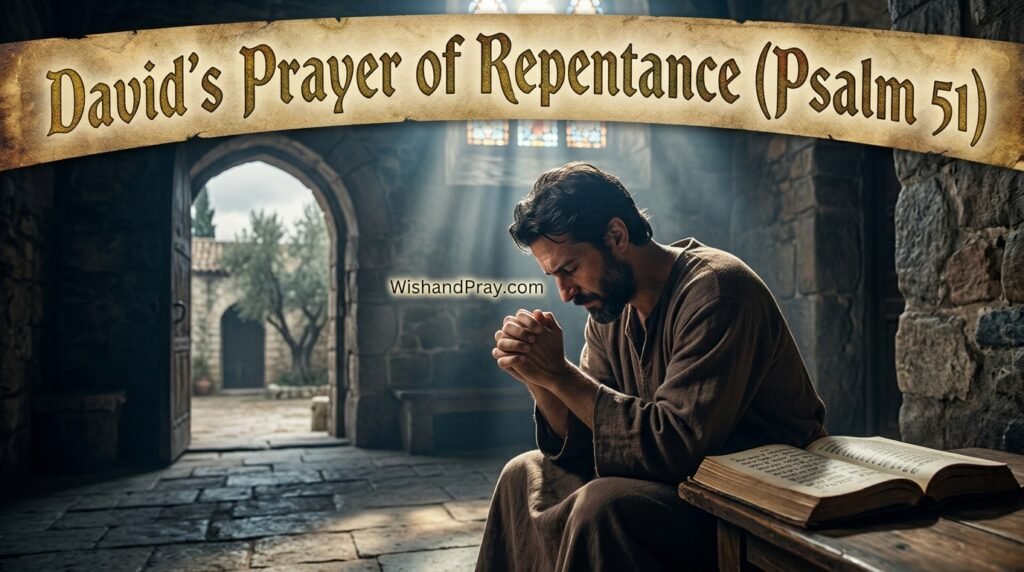
After his affair with Bathsheba and also after his part in her husband’s death, David wrote Psalm 51 which serves as a raw confession without a filter. There are no self-justifications to be found in this, no excuses, just a king who is broken asking God to make in him a clean heart and to not take His Spirit away from him.
This prayer is one of the most honest confessions in scripture because David does not minimize what he did. He names his sin clearly and he asks for true transformation, it is not just about forgiveness for him but also a new heart, a right spirit, and the joy that is restored. He knew that repentance isn’t just saying sorry but it also involves wanting to actually change and be different.
For anyone who is carrying guilt for a real failure or mistake, David’s prayer shows a path that doesn’t need to involve pretending that the mistake never occurred. It illustrates that honest confession along with a real desire for change is exactly the kind of prayer that God is likely to respond to with mercy.
Solomon’s Prayer of Dedication (2 Chronicles 6:14–42)
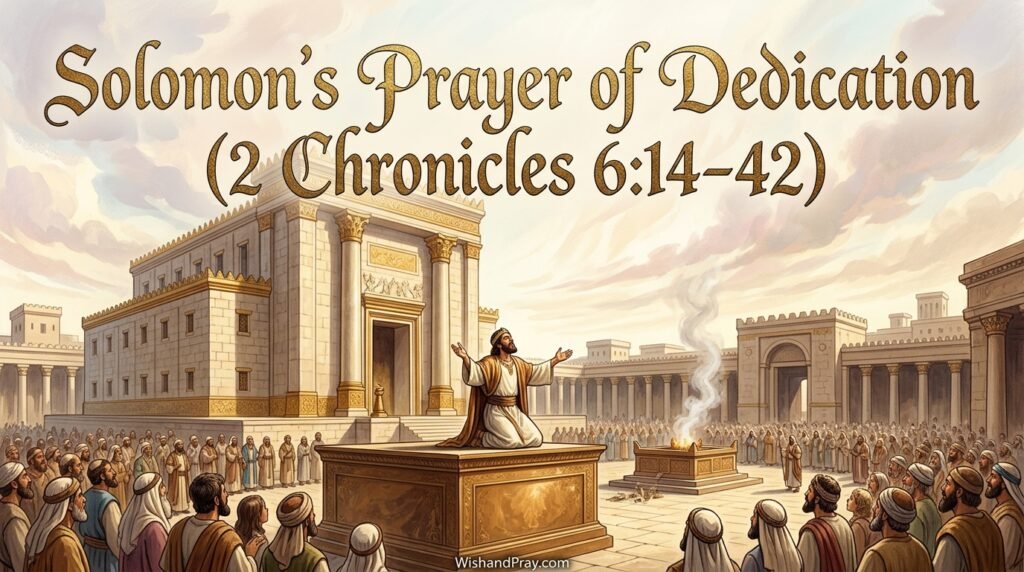
When Solomon finished building the temple in Jerusalem, he stood there in front of the whole assembly of Israel and prayed a very long public prayer to dedicate this place. He recognized that no building can really hold God inside it, but he asked that this spot would be a place for prayer for Israelites and also foreigners in times of sin, war, famine, and all sorts of trouble.
What really stands out about Solomon’s prayer is how broad it is. He does not only dedicate a building, but he seems to think about all the different ways people are going to need to return to God in the future like when they fail, face difficulties, or are in other countries and he asks ahead of time that God will listen to them every time. It’s like a prayer based on the belief that people are going to keep needing grace.
This prayer serves as a strong example for praying for not only what we need today but also for every future moment we can’t even imagine yet it’s about asking God beforehand to stay close to us through whatever happens, even before we know.
The Pharisee’s and Tax Collector’s Prayers (Luke 18:9–14)

Jesus told this story about two guys who went to the temple for praying. One man, who was a Pharisee, stood there all confident, talking about all the good things he did and was thanking God for not being like the other sinful people. On the other hand, the tax collector was standing far off, wouldn’t even look up at the sky, and just asked God for mercy in a really simple way.
Jesus explained that it was the tax collector and not the Pharisee, who was all religious and thinking highly of himself, who went home in a good standing with God. The important difference wasn’t about how religious someone acted or the list of morals they had; it was about being humble. One guy prayed to show off how good he thought he was. The other prayed because he fully realized how much he was in need of grace.
These two prayers as Jesus told it remind us strongly that God doesn’t really care for this kind of confident self-comparison that some people do. The prayer that actually gets through to Him is the humble sort — the honest recognition that we need mercy, and not this slick show of how little we think we really require it.
Paul’s Prayer for the Ephesian Church (Ephesians 1:15–23)

Writing from prison, Paul did not ask God to change his situation but rather he prayed for the believers in Ephesus that they would understand more about what they already had in Christ since he thought it important. He asked God to give them wisdom and to open their hearts’ eyes and help them get a good grip on the hope, riches, and power that were available to them being believers.
This prayer is not so much about asking for something brand new but more about asking for a deeper understanding of what is already true. Paul wished for the Ephesians to really get a hold of the vastness of God’s power which was the same power that brought Christ back from the dead and also at work in their lives, not just as some idea but as an experience they could truly feel.
For believers today, this prayer serves as a model for not just asking that circumstances change but for having eyes opened to see the hope, strength, and power that was already available to them, even in times that may not seem any different from the outside.
Read More: 80+ Heartfelt Birthday Prayers to Bless Family & Friends
Conclusion
These prayers that are found in the Bible span a lot of time and a lot of different circumstances, there is a dying Savior, there is a delivered nation, there is a grieving mother, a doubting psalmist, a repentant king, a dedicating ruler, a humble sinner, and an imprisoned apostle but each one holds this similar kind of honesty. None of them are exactly polished deals; rather they are real people with real feelings reaching out to God, whether what they express is praise, despair, confession, or hope. So whatever season you find yourself in today, let these prayers be a reminder that real strength and faith don’t usually come from having the perfect words at hand they come from just being your true self when you’re in God’s presence and having faith that He will be there with you.
FAQ’s
What does the Bible say about praying for strength?
Scripture repeatedly shows people turning to God in weakness like David in Psalm 51 and Asaph in Psalm 77 and finding renewed strength through honest prayer.
What is a good prayer for faith and trust in God?
Asaph's prayer in Psalm 77 is a strong example, showing how remembering God's past faithfulness can rebuild trust during doubt.
What is the shortest prayer in the Bible?
The tax collector's prayer in Luke 18:13 simply asking God for mercy is one of the shortest and most humble prayers recorded.
What prayer did Jesus pray before He died?
Jesus prayed the High Priestly Prayer in John 17, interceding for His disciples and all future believers on the night before His crucifixion.