
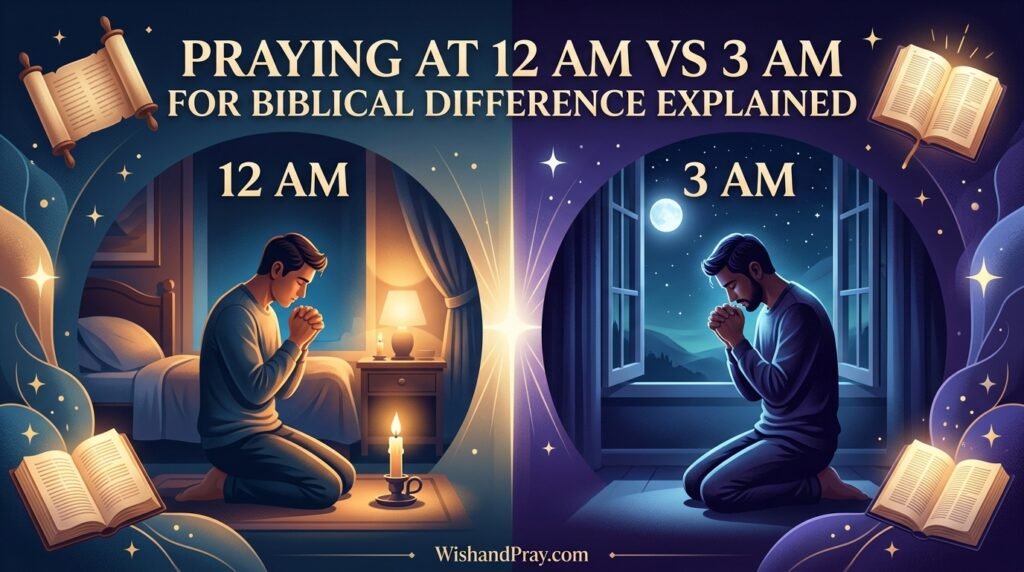

Praying at midnight or 3 AM seems to be a thing that a lot of Christians find meaningful when they want to get closer to God and look for guidance and peace as well as strengthen their faith. The times of night are usually seen as times for quiet thinking, real prayer, and a break from everyday stuff that gets in the way. Despite that, the Bible does not say Christians should pray at a certain hour or suggests that prayers said at 3 AM have more power than those at midnight. What the Scripture encourages is for believers to pray with faith, stay vigilant, and trust in God through everything that happens in life. Looking at the biblical differences in praying at 12 AM versus 3 AM can aid you in making a prayer habit that follows Scripture and not just out of fear or thinking that there’s some kind of magic in it. In this guide, we are going to look at midnight prayer, what the Bible means by the third watch, some examples of prayers at night found in Scripture, along with what the Bible says about how effective prayer is. So whether you like to pray at midnight, wake up at 3 AM, or talk to God in the daytime, the most important things are to have sincere faith, a humble heart, and keep a steady relationship with Him.
Difference Between Praying at 12 AM and 3 AM
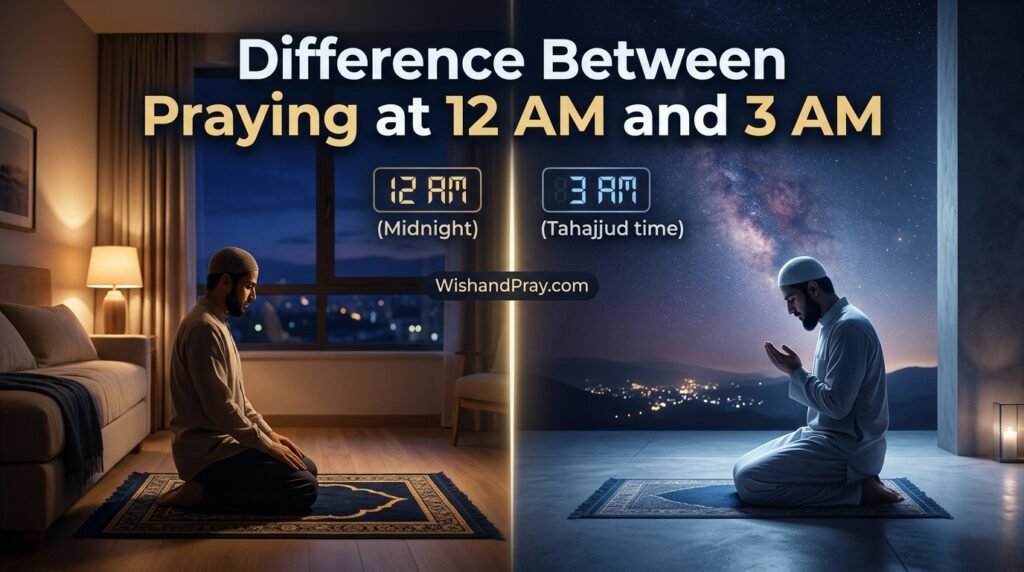
Praying at 12 AM and 3 AM can both give chances to connect with God in a more peaceful way. The major difference is about the time of night, the personal goals of prayer, and the biblical background that people link to these hours. Midnight is the start of a new calendar day, while 3 AM is really more in the early morning. There’s no time given in the Bible as a must-do for all Christians for prayer.
Midnight prayer usually gets linked to thanksgiving, surrender, spiritual reflection, and asking for wisdom from God in tough situations. In Acts 16:25, it talks about Paul and Silas praying and singing hymns to God around midnight when they were in prison. Their story shows faith and worship in times of suffering and doesn’t mean that every prayer at midnight will bring an instant miracle.
Praying at 3 AM sometimes connects to what people think about the night watches in the Bible. In the traditional practices of Christian prayer, this early time might be used for quiet devotion, intercession, repentance, and also for looking for direction. But Scripture doesn’t specifically say that 3 AM is the very best hour for praying. Christians can pray genuinely at any time and don’t have to think that God listens better at a certain hour.
The following table summarizes the main differences.
| Feature | Praying at 12 AM | Praying at 3 AM |
|---|---|---|
| Time | Midnight | Early morning |
| Biblical association | Paul and Silas prayed at midnight | The night watches and early-morning prayer |
| Common purpose | Thanksgiving, worship, surrender, and hope | Reflection, intercession, guidance, and devotion |
| Biblical requirement | No specific command to pray at midnight | No specific command to pray at 3 AM |
| Spiritual value | Depends on sincere faith and devotion | Depends on sincere faith and devotion |
| Practical consideration | May suit people awake near midnight | May suit people who naturally wake early |
It is also important to understand that biblical timekeeping differed from modern clock time. Biblical references to watches describe periods of the night rather than always identifying an exact modern hour. Therefore, assigning a precise spiritual meaning to every minute can go beyond what the biblical text actually says.
If midnight is the quietest time for you, you can use it to pray, read Scripture, and express gratitude. If 3 AM fits your schedule better, you can use that time for the same purposes. You do not need to wake up at either hour out of fear that you will miss God’s blessing.
CLICK HERE TO SEE
40 Bible Verses Important About Being a Good Man
Praying at 3 AM
Praying at 3 AM has become kind of a usual thing for Christians who find early-morning devotion, quiet thinking time, and focused prayers way important. During these hours a lot of people don’t get interrupted as much so it is easier to read the Bible, think about personal stuff that’s going on, and talk to God about their worries. However, it should be known that the spiritual importance of praying at 3 AM needs to be seen through what the Bible says more than believing that this time automatically brings miracles or some kind of big supernatural change.
The Bible has a number of instances where people are trying to reach out to God in the night or very early morning. Psalm 63:6 mentions remembering God while being in bed and reflecting on Him during the nighttime. In Mark 1:35, it is told that Jesus got up early, went to a quiet place and prayed there. These passages show that it is really important to set aside time to pray, but they don’t make 3 AM an obligatory time for praying.
Why Do Some Christians Pray at 3 AM?
- Early morning prayer it can be a way, a quiet time to think about big decisions and to ask God for wisdom. James 1:5 encourages believers to ask God for wisdom if they find themselves lacking. Instead of waiting for an answer at a specific time, Christians can pray and also study Scripture and look for wise advice as they make decisions.
- Some believers use 3 AM prayer to remember their families and friends and people going through tough times. They might pray for safety and healing and reconciliation and strength during hard moments. Intercessory prayer it gives Christians a chance to show compassion and bring their worries before God, not depending on the time as a way for their prayers to be answered.
- Setting aside a regular time for prayer can help make a consistent routine for devotion. For some people, 3 AM feels peaceful and it is convenient. Other people may find praying before work or during lunch or even in the evening feels more doable for them. Spiritual discipline should help with being faithful and not make people feel tired or guilty.
- A quiet hour it can allow time to read a Psalm and think about a Gospel passage and consider what it means. Instead of rushing through a long list of things to ask for, you might focus on what the passage tells about God’s character and His love and wisdom and faithfulness.
- Nighttime prayer it can provide a chance to look at your actions for the day, admit mistakes, ask for forgiveness, and also give thanks to God for the good things of the day. First John 1:9 speaks about confessing sins and God’s faithfulness to forgive and cleanse. This promise it does not just apply to those who pray at 3 AM.
Is 3 AM More Powerful Than Other Prayer Times?
- The Bible does not teach that 3 AM prayers are stronger than prayers given at noon, midnight, or any other hour. The strength of prayer should not be looked at by what time it is on a clock, how many hours someone has been awake, or how intense a person’s feelings are.
- Matthew 6:6 talks about private prayer, and then there is 1 Thessalonians 5:17 which is telling believers to pray all the time. These different teachings show the importance of having a true and ongoing relationship with God.
- So if you are going to pray at 3 AM, it might be good to have a simple routine to follow. You could start with giving thanks, read a short passage from the Bible, share your honest concerns, pray for others, and then end with some quiet time to reflect. It’s important to make it manageable and not forget to give yourself enough time for sleep and rest. There’s really no reason to give up on good health just to show how much faith you have.
- To sum it up at the end here, praying at 3 AM can be something meaningful for you personally if it helps you to focus on God and to live according to what the Bible teaches. Its worth is found in true prayer and living faithfully, and not just because this specific hour is thought to have some kind of special power.
What Does the Bible Say About Praying at 3 AM?
- The Bible talks a lot about prayer at various times throughout day and night, but it does not really say directly that you should pray at 3 AM. Christians that decide to pray at that hour sometimes link it with nighttime watches, the times when Jesus prayed early in the morning, and stories from the Bible where people really reach out to God in tough situations. These story examples could serve as helpful models for regular prayer habits as long as they are understood rightly in context.
- Psalm 119:62 mentions that the psalmist gets up at midnight to give thanks to God due to His judgments that are righteous. This verse shows expressing thankfulness at night, but it doesn’t set midnight as the only time that someone’s supposed to be thankful or imply that praying at 3 AM holds some different level of importance spiritually.
- Mark 1:35 brings forward another significant situation, telling that Jesus got up early to find a quiet place and pray. This story indicates that Jesus sought time to talk with God the Father, even while He had an extremely busy ministry. However, it doesn’t note any specific hour like 3 AM. The lesson we might take away here is about the importance of intention with praying, not about sticking to any kind of strict schedule.
- Luke 6:12 talks about Jesus staying up all night to pray to God before He chose His twelve apostles. This story emphasizes prayer linked directly to making important decisions. It urges Christians to ask for guidance from God when they are facing responsibilities and relationships and especially any major life choices. That doesn’t mean every believer has to stay awake the whole night in order to get divine guidance.
- Matthew 14:23 also mentions that Jesus went up a mountain to pray in the evening by Himself. So when we look at all these passages together, we find the consistent pattern in the Bible is that prayer can happen in lots of different places and times. Jesus shows us it’s about devotion, solitude, and depending on God instead of following a fixed timetable.
- Another passage to think about is Ephesians 6:18, which encourages people to pray at all times using all sorts of prayers and requests. The main focus here is on keeping a spiritual awareness and praying for others. Likewise, Philippians 4:6 tells Christians to bring their worries and concerns to God through prayer and by showing thanks.
- Those verses build a solid groundwork for anyone interested in starting a 3 AM prayer practice. It can be a time to confess sins, seek wisdom, pray for family, show gratitude, or think about what Scripture says. You can also spend time praying about personal fears or tough situations and it doesn’t mean that every problem is going to just go away right away.
- It’s really important to steer clear of any messages that whip up unnecessary fear around praying at night. The Bible does not say that if you miss a 3 AM prayer this will somehow lead to evil winning out or make God’s protection fade away. Those kinds of statements go beyond what Scripture clearly teaches.
- In conclusion, the message in the Bible about prayer at 3 AM is better viewed through the more extensive invitation to sincerely seek God, believe in His wisdom, and keep being faithful in prayer. If this particular time helps your spiritual growth, it could work well as a devotional practice. But if there’s another time that is better suited for you, you can still keep a valuable and steady relationship with God.
Praying at the Third Watch (3 AM)
- The phrase third watch often gets used when talking about nighttime prayer, especially by Christians who follow these prayer schedules that share some references from the Bible about the watches in the night. To really understand this whole subject correctly, it helps to know the different ways of timekeeping that were used in biblical times versus how people today might pray at 3 AM.
- In the New Testament, Mark 13:35 talks about four watches, those being evening, midnight, when the rooster crows, and morning. These periods are basically seen as the four Roman night watches. It’s common to approximate these watches as covering times around 6–9 PM, then from 9 PM to midnight, going from midnight to 3 AM, and then from 3 to 6 AM, though the exact cutoffs might change a bit.
- Following with this Roman-watch idea that’s often used, the third watch is thought to run roughly from midnight to 3 AM, while after that, the fourth watch starts about 3 AM and goes until dawn. Some of the teachings from modern Christians might use different labels, and some might even say that 3 AM is part of a third watch. This explains some of the inconsistencies regarding descriptions of the third watch among those discussions.
- The Bible itself does not really give 3 AM any kind of special spiritual significance based on this watch system. Instead, the mentions of the night watches are more about helping people understand when certain events in biblical stories happened.
- As an example, Matthew 14:25 mentions how Jesus walked on the sea toward His disciples during the fourth watch of the night. That moment was dramatic in the experience of the disciples, but the passage does not serve as a guideline for when exactly to pray. The important point is about Jesus’ presence, authority, and how the disciples dealt with their fear at that time.
- Also, Psalm 63:6 talks about the meditation during the night watches. This verse illustrates that nighttime could be a good chance for remembering God and thinking about His goodness. It shows support for the practice of night prayer, though it does not make one particular watch mandatory for all believers.
How Can You Use the Night Watches in Prayer?
- You can think of the night watches like a sort of guide to help you organize your personal prayer time instead of seeing it as some sort of strict spiritual formula.
- So in the evening, it might be good to thank God for all the things that happened during the day and also look back on what you learned from those experiences.
- Then around midnight, it can be a time to bring your personal worries to God and also to pray for other people who might be suffering or going through tough times.
- In the early morning, reading Scripture could be a good way to seek wisdom, and also get your heart ready for the day that’s coming up.
- And whatever time it is, feel free to pray when it seems necessary to show gratitude, confess mistakes, or ask for some help.
The Bible also talks about the need for believers to stay spiritually vigilant. In First Peter 5:8, there is a warning for Christians to be alert, using the idea of vigilance. This is really more about having spiritual awareness and self-control, not a directive to stay awake at a specific time of the night.
If you think you’re called to pray during the night watches, it’s important to keep that practice peaceful and rooted in Scripture. You should not jump to the conclusion that a strange dream, feeling scared suddenly, or waking up at exactly 3 AM means there is some kind of supernatural message in that. You should think about those experiences carefully and maybe look for good pastoral advice if it’s needed.
In the end, the biblical night watches can help to clarify the context of Scripture and can also inspire personal devotion for individuals. They don’t set up some sort of hierarchy where one hour of prayer is going to get you better results than another hour. The main thing about nighttime prayer is still faith and humility, love, and trust in God.
Biblical Examples of Nighttime Prayer
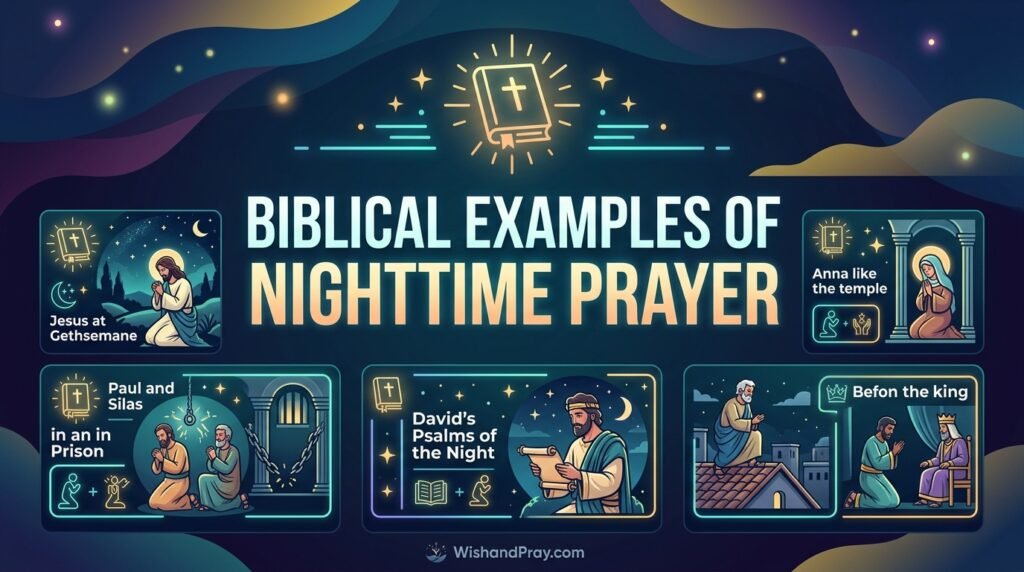
- The Bible shows a bunch of examples of people who prayed, worshipped, or sought God during the nighttime. These stories make it clear that prayer does not stop when the sun goes down and believers can talk to God even in times of confusion, suffering, thanks, and when needing to make important choices. These stories also kinda explain why praying at midnight or early in the morning still matters to a lot of Christians these days.
- Acts 16:25 mentions Paul and Silas who were praying and singing hymns while they were locked up. Even though their situation was rough, they kept on worshipping God and the other people in the prison could hear them. This story stands out as a clear biblical example of praying at midnight. It teaches about hangin’ in there, faith, and worship during hard times but it doesn’t promise that every midnight prayer will mean an immediate miracle will happen.
- Mark 1:35 tells that Jesus got up early in the morning, went to a quiet place, and prayed. The text doesn’t say it was exactly 3 AM, but it shows how important it is to make time for prayer before the day really gets going. Christians can take this as a cue to carve out some quiet time for reading Scripture, reflecting, and chatting with God.
- Luke 6:12 has this scene where Jesus went to a mountainside to pray all night. After he spent that time with God, the next day, he picked his twelve apostles. This thing highlights how important it is to pray when you have big responsibilities. It nudges believers to look for God’s wisdom and guidance instead of just acting on their own without thinking it through.
- Psalm 63:6 talks about contemplating God during the night hours. The psalm shows a strong wish for God’s presence and a readiness to remember Him even when it’s all quiet. This can give Christians a boost to use their nighttime prayers to show thanks, think about Scripture, and bring to mind God’s loyalty during both happy times and tough times.
- Matthew 26:36–46 describes how Jesus prayed in Gethsemane just before He was arrested. He’d express really deep sadness and turned himself over to the Father’s will. This strong example shows that prayer can also include true feelings, pain, and giving in. Christians can lay down their fears and worries with God without pretending everything is just fine.
- Daniel 6:10 recounts Daniel who prayed and thanked God three times each day, even when it put him in danger. The text doesn’t specify that these prayers were 3 AM, but it shows how Daniel was consistent and brave. His story shows that keeping up faithful prayer can stay a part of daily life even when things get tough.
- Matthew 6:6 teaches folks to keep their prayers private instead of trying to get attention or praise from others. Although it doesn’t mark a specific hour for doing so, it does support finding a calm place for sincere praying. Both midnight and early morning could be good times for this sort of thing.
- These examples from the Bible share a common theme: praying is a way to seek after God, show faith, receive wisdom, and stay spiritually anchored. Some people prayed at night while others stuck to routines at different times.
- You can take lessons from these examples without thinking you have to do exactly what they did and at the same times. If you feel like praying at midnight or 3 AM, focus more on what the biblical principles are behind that practice. Being honest with God, praying for other people, reading Scripture, and staying faithful through hard times is what really counts.
Effectiveness of Prayer
- The effectiveness of prayer is a thing that matters a lot for Christians who want to figure out if praying at midnight or 3 AM really makes a spiritual difference at all. The Bible, it says prayer is this chance to talk with God, show how much we depend on Him, look for wisdom, confess sins that we have, and pray for others too. Its meaning isn’t just based on what time a person starts praying so that’s something to think about.
- First John 5:14 says that believers can go to God with confidence if they ask for what is according to His will, which is not just about getting what we want. This passage highlights trusting in God’s plans instead of thinking every request is going to be answered exactly as the person wished. Prayer is not just a way to control what happens instead means it’s part of a relationship which needs faith and dependence.
- Philippians 4:6–7 tells believers to take their needs to God and to do it with thanksgiving. This part links prayer and the peace of God, which is said to guard the heart and the mind, but it doesn’t mean that praying makes every single problem go away right away. Actually, prayer can help Christians deal with the times of uncertainty while also keeping in mind God’s presence and His promises which is a pretty big deal.
- James 5:16 focuses on prayer too and talks about the prayer of a righteous person being really powerful and effective. In the context, James is also is mentioning confession and healing and the kind of mutual support that comes from praying for one another. The verse wants to motivate sincere and faithful prayer instead of thinking that just praying at a certain hour is gonna get a specific outcome which might not be how things work.
What Makes Prayer Meaningful and Effective?
- Pray in a way that is honest instead of just using fancy words that sound all religious. You can say thanks, express sadness, feel fear, share hope, or show uncertainty. A real prayer does not need to have fancy language or be a certain length to mean something.
- Hebrews 11:6 talks about how important faith is when you are going to God. Having faith does not mean you have to just ignore all your doubts or act like everything is perfect. It means you keep looking for God while trusting in His wisdom even when you don’t really know what is going to happen.
- When you pray, it should encourage things like love and forgiveness and honesty and humility and compassion. If you are asking God for help but you refuse to be kind or act with integrity, that just goes against what Christians are called to do and be.
- Having a regular time to pray can really help you grow in your spiritual life. You could pray at midnight or at 3 AM or before you go to work or in the evening. It is better to pick a time that you can stick with instead of trying to measure how much faith you have by how many hours you stay awake.
- Some prayers get answered really quickly and then you have others that make you wait a long time. Christians might see these experiences in different ways, but the Bible keeps telling you to be patient and keep going. Don’t think a delay means God does not want to listen to you or that you didn’t pray at the right time.
- Praying can help give you courage and clarity while you try to take practical steps in your life. If you are looking for a job, you can pray while you look and apply for jobs. If you want to make a relationship better, you can pray while being honest and trying to forgive. Faith can work together with some responsible action.
Conclusion
Praying at 12 AM versus 3 AM is a topic that many Christians explore while seeking a deeper understanding of nighttime prayer. The Bible provides meaningful examples of people praying during the night, including Paul and Silas at midnight, Jesus praying early in the morning, and the psalmist meditating during the night watches. These examples encourage believers to make time for prayer and trust God during every season of life.
However, Scripture does not command Christians to pray specifically at midnight or 3 AM, nor does it teach that one of these hours automatically makes a prayer more powerful. The biblical night watches provide historical context for certain passages, but they should not be treated as a formula for receiving blessings or preventing spiritual harm.
Frequently Asked Questions FAQ’s
1. Is praying at 3 AM biblical?
Yes. Christians can pray at 3 AM, and the Bible includes examples of nighttime and early-morning prayer. However, Scripture does not command believers to pray at this exact hour.
2. Is midnight prayer more powerful than 3 AM prayer?
The Bible does not teach that midnight prayer is more powerful than 3 AM prayer. Both can be meaningful opportunities for sincere worship and communication with God.
3. What does the Bible say about praying at midnight?
Acts 16:25 describes Paul and Silas praying and singing hymns at midnight. Psalm 119:62 also describes rising at midnight to give thanks to God.
4. What is the third watch of the night?
The night watches were periods used to divide the night. Under a common Roman-watch framework, the third watch ran approximately from midnight to 3 AM, followed by the fourth watch.
5. Did Jesus pray at 3 AM?
The Bible records Jesus praying early in the morning and spending entire nights in prayer. However, it does not specifically state that He prayed at exactly 3 AM.
6. What should I pray for at 3 AM?
You can pray for wisdom, peace, family, forgiveness, healing, strength, and guidance. You can also express gratitude and reflect on Scripture according to your needs.
7. Does God answer prayers made at midnight?
Christians believe they can approach God at any hour. The Bible encourages prayer and trust in God’s will, but it does not guarantee that every request will be answered exactly as expected.